


3 Joyful Benefits of Cooking With Grandparents

Originally published on March 24, 2023. Updated November 26, 2025

No matter the age of the child, from 2 to 22 (yes, I still tried to get in the kitchen with my grandma at 22 years old), cooking with our grandparents has benefits that transcend into skills needed for the future.
If I had my way, cooking programs would be in all schools pre-K to 12 and beyond. Within those cooking programs, would be a grandparent. As a foods teacher, well trained and versed in teaching and cooking, I still call my mom for help. There is just something in the "a little bit of this and a little bit of that" thrown into each recipe that I can't quite master. This is why getting hands-on in the kitchen with grandparents is so important for children.
My research on intergenerational food storytelling showed that when children hear stories about where food came from such as who grew it, who cooked it and who carried it from one generation to the next, they develop a deeper sense of identity and belonging. These shared stories create what we call “collective memory,” a powerful protective factor for mental health. Food becomes the bridge between generations, and the kitchen becomes the classroom where connection grows.
Thinking of getting older adults and the kids together in the kitchen? Here are a few tips, benefits and ideas.
Farm to table

These days our children and students grab quick and easy snacks and meals, mainly because as a society we are so busy. Children are learning that this is normal. If you are one of those parents who teach your child to read nutritional labels, this is showing them good skills in understanding where their food comes from. However, sometimes, wouldn't it just be easier if foods didn't have labels? Homemade butter from the farm doesn't have a label, neither do the fresh Saskatoon berries growing outside our door. Cooking with our grandparents and parents can bring these stories to life. As berries are added to the muffins, grandma talks about how she used to pick the berries and how her mother used them in recipes for the family. This creates a connection and bond to the berries that a package could never bring.
Ask grandma the following questions:
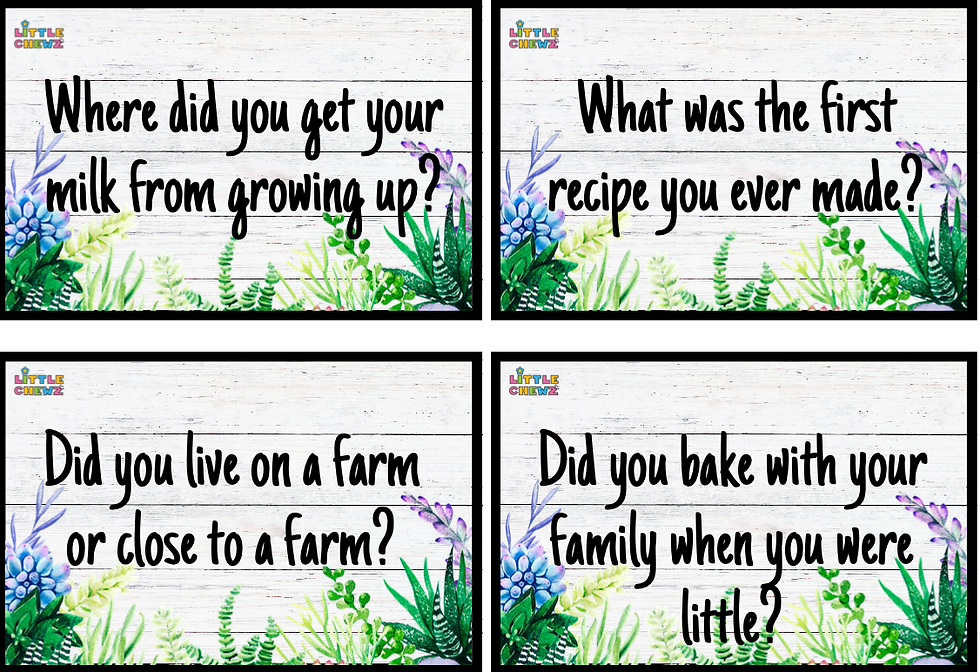
1.Where did you get your milk from growing up?
2. Where did you buy your bread?
3. Did you live on a farm or close to a farm?
Increase academic skills

Besides the notable integrations of math through measuring ingredients, there is also a wealth of learning that can happen when grandparents cook with the younger generation. A soft skill that is maybe not as obvious is storytelling. Children can embark on an adventure that teaches them good listening, speaking and comprehension skills. When we learn about our own history, we are much more invested in the story being told. The story becomes a part of us and who our family was. This provides children a sense of connection to the food and the family heritage. This improves self-esteem and gives both grandparents and children a purpose for cooking as they are learning and sharing something meaningful. Children always enjoy activities that are about them. It lights up their emotional center and they retain the skills that they have learned much quicker.
Ask grandma the following questions:
Did you bake with your family when you were little?
What did you learn in school?
Did you do chores when you were my age?
Quality time

Since the pandemic, we lost a lot of time with our extended families. Some stories have been lost forever, others are still waiting to be shared. What better way to share stories than when our grandparents and parents are in the kitchen? The one thing I will always regret is not living closer to home. Due to circumstances, I always lived away from home. I missed many opportunities to get in the kitchen with my mom and grandma in the later years, when I was really interested in learning how to cook. Then I spent endless hours trying to re-create those recipes and stories to try to remember how the recipe tasted or the emotional attachment I had to the story. When your children are young and still at home, they can still have this quality time and develop a love of food and culture. For those children who no longer have grandparents, schools can be a great place to bring in more food experiences and intergenerational connections. You may also have heritage recipes. Try making one with your child to encourage that quality time together. These are the activities they will remember.
Ask grandma the following questions:
What was your favorite recipe growing up?
What did you make around the holidays?
What was the first recipe you ever made?
Click below if you would like free printable cards you can cut and laminate to place in your conversation recipe box for future cooking time with grandma.


Comments